Effective Use of Resources and Contribution to a Low-Carbon Society
In order to help create a society where sustainable development is possible, Roland DG has a range of initiatives aimed at reducing its environmental impact.
Promoting Recycling of Waste
Roland DG actively promotes the recycling of waste with the aim of achieving zero emissions. Cardboard and old paper, steel, aluminum and electrical wiring (copper) are also processed by respective recycling contractors. Additionally, Roland DG directly verifies on-site that proper processing is being carried out at the commissioned processing facilities. The waste recycling is monitored and measured by the EMS (Environmental Management System) Committee, and targets have continually been met since 2011, when measurements first began, through to 2023.
Energy-Saving Activities
Measures to conserve electricity are being implemented, including making adjustments to the air-conditioning temperature, to reducing the time employees spend at offices. Lighting within company buildings is gradually being changed over to LED, energy-efficient air conditioning equipment is being introduced, and company vehicles are being switched to “eco-cars” such as electric vehicles or hybrids as part of efforts to reduce CO2 emissions. In fiscal 2022, the head office and Miyakoda office in Hamamatsu have switched their power consumption to CO2-free electricity.
Furthermore, Roland DG's annual total energy consumption in Japan is below 800 kiloliters by crude oil equivalent, significantly lower than the standard of 1,500 kiloliters for Type 2 Specified Businesses.
Energy Creation Activities
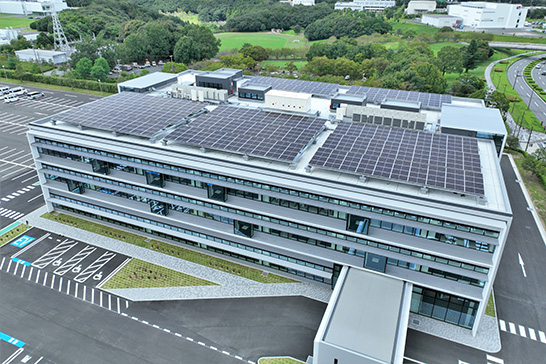
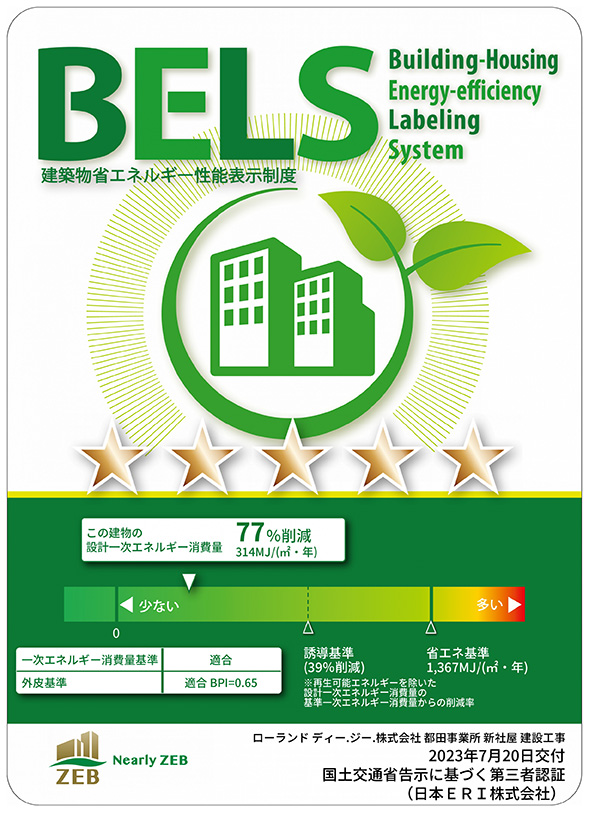
Solar power generation is being harnessed as part of efforts to create clean energy from environmentally friendly, sustainable resources. A solar power generation system has been installed on the roof of the head office and Miyakoda office, with generated power used for lighting inside offices as well as air-conditioning systems. The head office building completed in fiscal 2023 has achieved “Nearly ZEB (Zero Energy Building) certification” through a 75% reduction in energy consumption, thanks to the aforementioned energy-saving and energy-creating initiatives.