Direct-to-Film
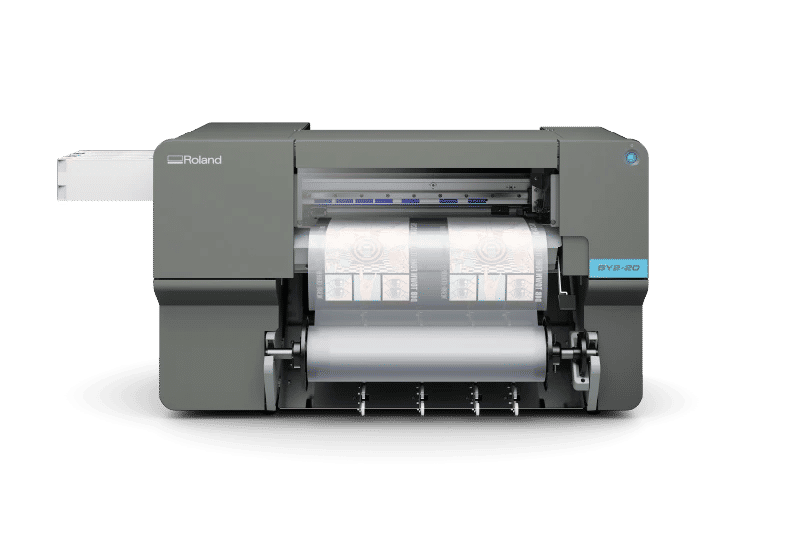
VersaStudio BY2-20
NEWA complete DTF solution for apparel decoration. Built for consistent, dependable DTF production
- Compact 20" direct-to-film printer for apparel, accessories and textile decoration
- Dual white ink configuration with S-PG2 CMYK + White inks supports stable DTF production.
- Complete solution with Roland DG DTF Film, S-Powder, Connect Designer and VersaWorks 7
- Supports standalone cutting for HTV graphics, lettering, numbering and specialty media applications
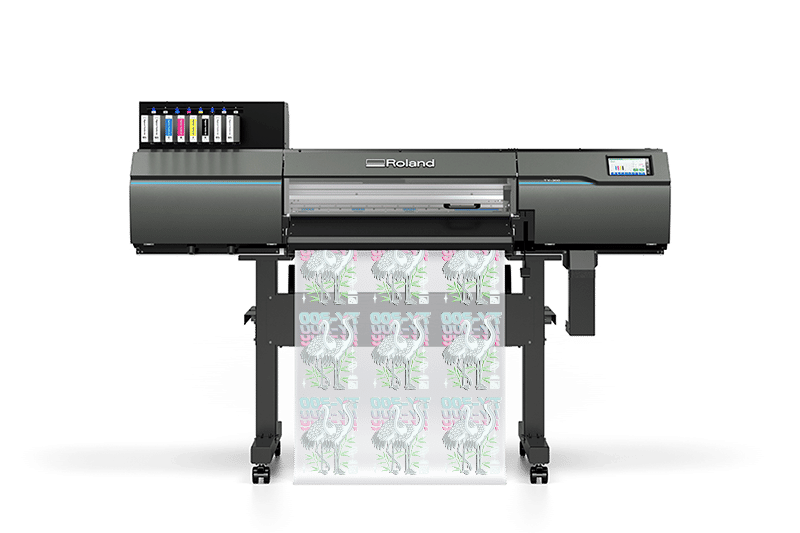
TY-300i Direct-to-Film Printer
The best-in-class direct-to-film printer for bringing your boldest ideas to Life on custom apparel and textiles.
- 30” direct-to-film printer.
- Unparalleled DTF performance, productivity, and cost efficiency
- Stable, high-quality printing at speeds that are up to 45% faster than competitive models
- Exclusive DTF inks with CMYK and 4×White for continuous production
- Ideal for creating customized T-shirts, sportswear, jerseys, tote bags, home décor, and more
Frequently asked questions
DTF (direct-to-film) printing prints a design in reverse onto a special transfer film using CMYK and white inks. An adhesive powder is applied to the still-wet ink and then cured, and the film is heat-pressed onto T-shirts, sportswear, bags, and other items. It reproduces vibrant full-color graphics, fine lines, and small text on a wide range of fabrics.
DTG (direct-to-garment) prints directly onto the garment. It works best with 100% cotton and can also be used with garments that have a high cotton content. It usually requires pretreatment, particularly when printing on dark garments. DTF prints onto film first and then transfers the design to the garment with a heat press. No pretreatment is needed, and DTF transfers can be applied to cotton, polyester blends, denim, nylon, rayon, and more. This makes DTF a flexible choice for businesses that want to work with a wider range of fabrics.
DTF transfers can be applied to cotton, polyester blends, denim, nylon, rayon, and other fabrics, on both light and dark colors. This lets you take on orders for T-shirts, sportswear, workwear, hoodies, tote bags, caps, and more.
No. With DTF, the cured adhesive powder on the printed film bonds the design to the fabric, so there is no need to pretreat garments. This saves preparation time and reduces the risk of stains or uneven results.
A typical DTF workflow uses a DTF printer, design and RIP software, DTF film, inks, and adhesive powder. Powder can be applied by hand or with a shaker unit, then cured with an oven or a shaker and dryer unit. A heat press is used for the final transfer, and a flatbed heat press is recommended.
Yes. DTF requires no screens or plates, so one-offs and short runs are just as easy as larger orders. You can also place multiple designs on one roll of film, which makes it easy to handle many small orders efficiently.
DTF prints offer reliable wash durability and are designed to maintain their color and finish over time. For best results, follow the recommended production settings and use genuine Roland DG film and powder.
The VersaStudio BY2-20 is a compact DTF printer that is ideal for short runs, one-offs, and on-demand production. The TY-300i is built for high-volume, continuous production, with a printing width of up to 736 mm and fast production speeds.
DTF is well suited to full-color designs, one-offs, and small batches because it does not require screens to be prepared for each design. It also works across a wide range of fabrics, making it a flexible option for businesses handling varied designs and order sizes.