Collaboration with Keiji Ashizawa Architects to Develop Ceramic Interior Décor Using Powder 3D Printers
12/05/2025 Corporate Activities, Digital Printing
The development of interior décor products using our powder 3D printers was featured in the October 2025 issue of CONFORT, a magazine specializing in interior design and architecture. The following is from the published article. (The department name is at the time of the interview.)
The evolution of technologies in other fields, such as molded plywood, insulation, carbon fiber, and FRP, is changing the world of architecture and interiors. There are countless examples of innovation. The theme of this article is a 3D printer developed by Roland DG. It is groundbreaking in that it can produce ceramic moldings instead of general resins. How can this technology be utilized? Architect Keiji Ashizawa was challenged to find out.
(Interview and text by Jun Shimizu Photography/Satoshi Asakawa)
Mr. Keiji Ashizawa was invited to Roland DG to prototype a sculpture with a new 3D printer that he had never been seen before. The project began with a company overview held in the meeting room of the Tokyo office in Shinagawa, Tokyo.
“Roland is an electronic musical instrument manufacturer, known all over the world,” said Mr. Ashizawa.
“That’s what you have in mind,” replied Keiji Tanaka of the Corporate Headquarters. “But Roland DG is a derivative company from that beginning and in the 1980s, it evolved into making musical instrument kits, and then developed pen plotters for outputting CAD data, as well as cutting machines, and has since become a major manufacturer of inkjet printers.”
The multifunctional inkjet printer for printing outdoor advertising signs is the company’s flagship product. Since the end of the 90s, it has also developed 3D-related businesses. The high-precision 3D milling machine that was developed in 2000 has progressed to the processing of dental prosthetics and has grown rapidly.
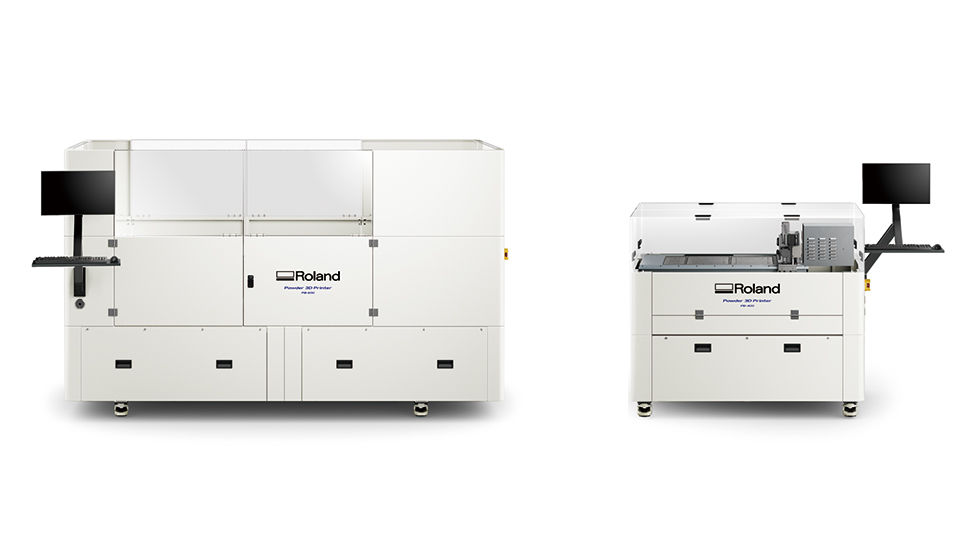
After many years of development, the “powder 3D printer” was born. Two models, the PB-600 and PB-400, were released in January this year. Artificial ceramic powder is used as the material to create ceramic sculptures. For this project, Mr. Ashizawa came up with an idea to create something.
-

At the Roland DG Tokyo office in Shinagawa, Mr. Ashizawa was introduced to a powder 3D printer that can make ceramic sculptures. After looking at the samples, Mr. Ashizawa immediately came up with a lighting fixture that could make the most of the texture of the pottery.
-

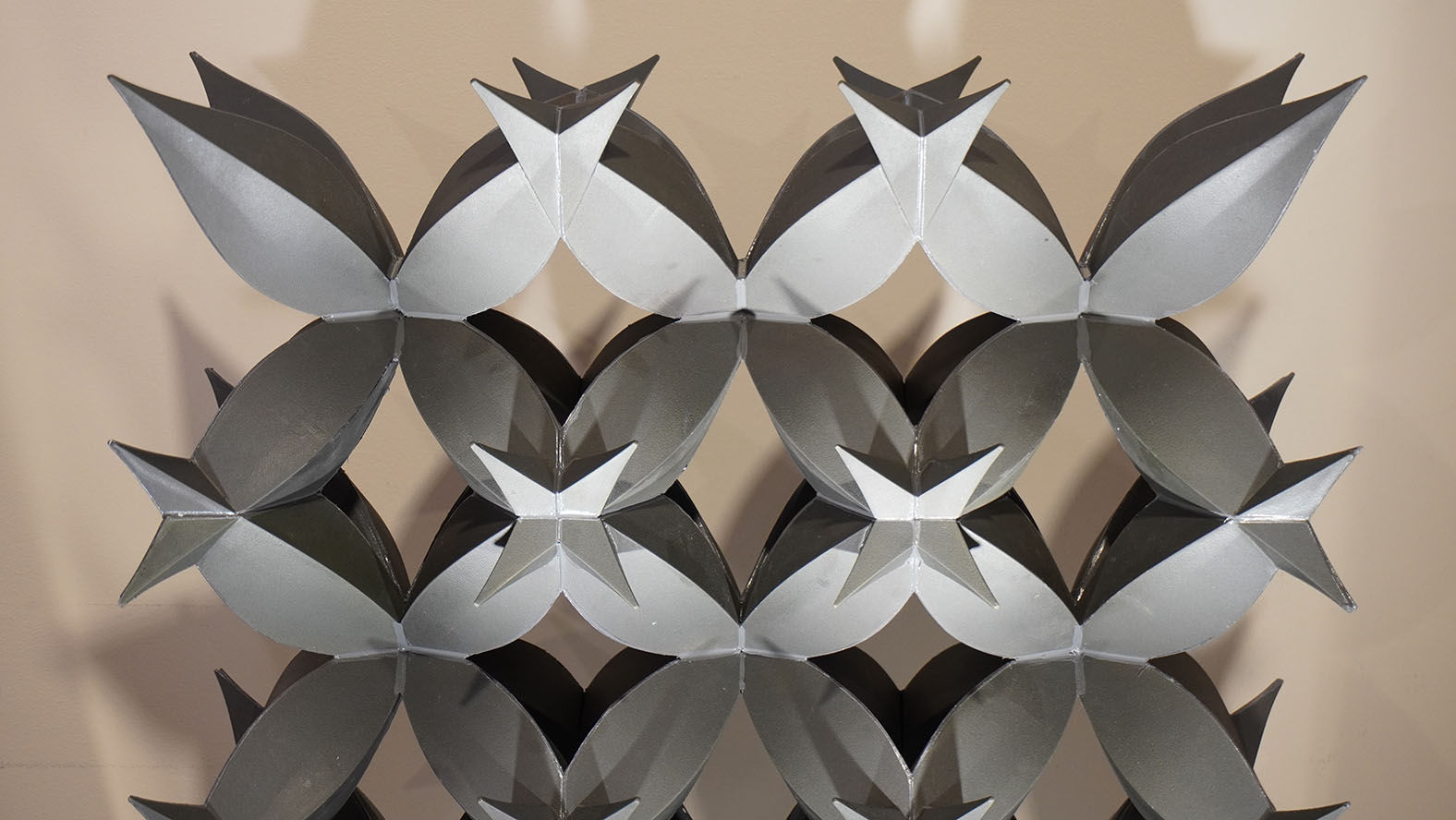
Samples: A major feature is that ceramic powder can be modeled with complex design shapes. There is no difficulty in 3D modeling. Hexagonal pottery has edges that can fit together to create a distinctive design wall.
How do you shape it? Kazuharu Muramatsu of the company explained, “Using 3D data, the binder jet method sprays a liquid binder from the print head in layers onto artificial ceramic powder. The shape is built layer by layer with the thickness of each layer just 0.1 mm and only the printed part hardens. You can think of it as replacing the ink of the inkjet printer we are all familiar with jetting the binder.”
For example, when printing with the PB-400, the sculpture is buried as if floating in a 200 mm high powder layer. When jetting resin from the nozzle of a general 3D printer, the shape within the middle of the stacking process can be observed. But in the binder jet method, you can only visually see the powder stacked flat. “Well, during the printing, it’s pure white and you can’t see the modeling,” said Mr. Ashizawa, who seemed amused by this unexpected fact. It is only when it is removed from the powder that the sculpture is revealed.
The sculpture is taken out, and the first firing (unglazed) is carried out with a series of processes. The glazing and secondary (main) firing are then completed at cooperative kilns.
“I often use 3D printers that use resin in my office,” Mr Ashizawa said. “I can make furniture models, consider them, and use them in various ways, but the texture of resin cannot be crafted no matter how far it goes. But this model is highly accurate and the texture of the ceramic is very good,” added Mr. Ashizawa while looking at the sample.
-

Output and Printing: With a Powder 3D Printer, 3D design data (STL file format) is converted into slice data and output. A liquid binder is dispensed from the print head to harden the artificial ceramic powder, and each layer is molded in 0.1mm thick increments. It takes about 1 hour to build a height of 1 cm.
-

Depowdering (dispensing powder): Gently take out the sculpture formed in the artificial ceramic powder layer and blow air into the depowdering machine to remove the powder. The remaining powder is removed by hand. The average particle size of the powder is very fine -- about 50 μm.
-

Soaking and drying in impregnating material: The sculpture hardened with a binder is immersed in the impregnating material. After that, remove it and dry it for half a day.
-

Primary firing (unglazed): The strength is increased by putting the dried sculpture in the firing kiln and firing it at 1200°C or higher. If the shape is easily deformed, it is supported with ceramic beads and baked together.
-

Glazing, secondary firing (main firing): From here, the kiln process begins. Glaze is applied to unglazed sculptures and secondary firing is performed. You can consult with the kiln owner about the color and expression of the glaze and check it with a firing sample.
-

Top/Glaze Color Designation: Specifies the candidate glaze color for the kiln where the secondary firing will be performed with DIC. We also consult about gloss, matting, and penetration (cracks in glaze). Bottom/A sample fired by the kiln with a glaze of the candidate color. We were asked to give a sample of two light colors with a reduced yellow tint, and I chose one color. Matte finishing and penetration were also considered.
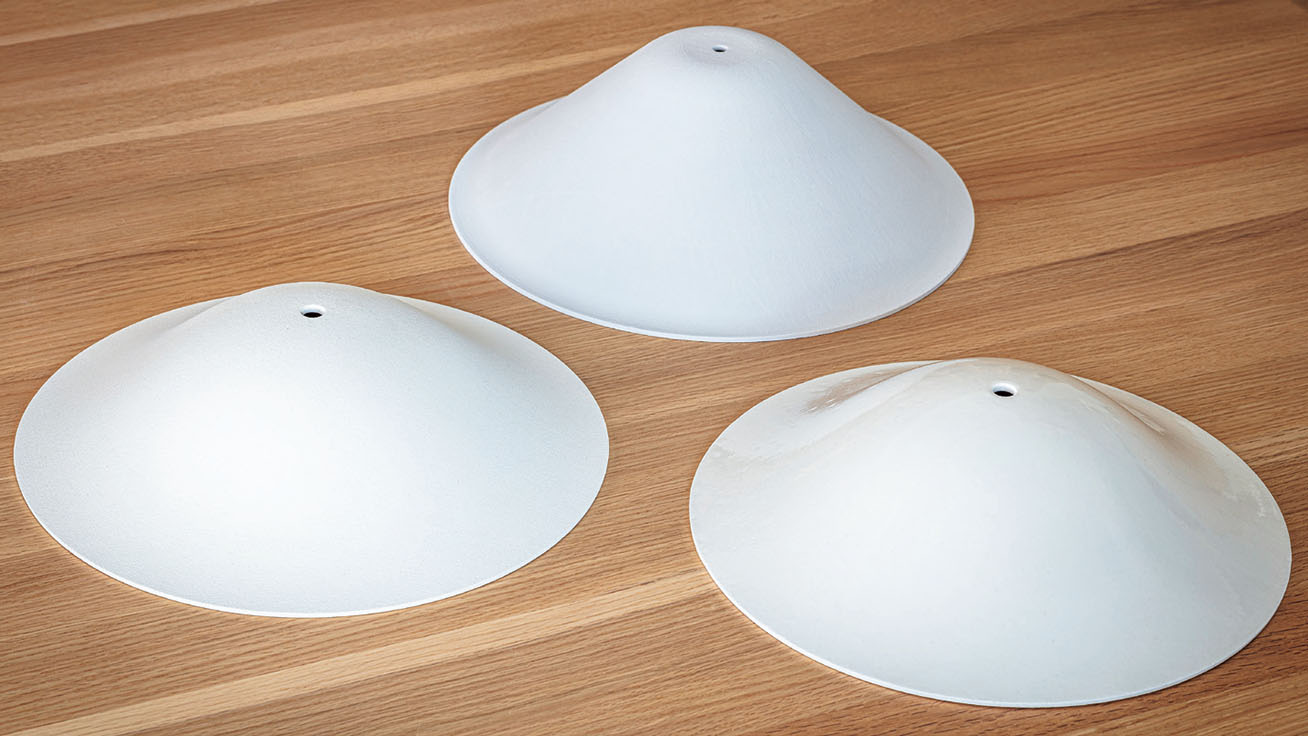
The lower two shades were modeled at the same time. The left side is unglazed, and the right side is glazed from a secondary firing. The artificial ceramic powder is a major feature of the shrinkage rate of about 1% after firing. Above is the original Mt. Fuji shape shade (before the first firing).
A characteristic benefit of this printer is that complex shapes that would take time and effort by human hands can be created with only 3D data. Within the work area of the powder layer (PB-600 has a maximum width of 595 mm× depth of 600 mm× height of 250 mm), data can be copied and laid out in many pieces with different shapes and in any orientation, and can be molded all together. Remaining powders other than the molding part can be reused. In general, pottery shrinks by more than 10% when fired, but the shrinkage rate of the artificial ceramic powder used is only about 1%. It can produce pottery with high dimensional accuracy. The minimum thickness is 3 mm, and the strength is the same as that of ordinary ceramics. It is expected to be used for the production of high-value-added ceramics and to respond to the shortage of experienced craftspeople using traditional techniques.
While listening to various explanations, Mr. Ashizawa’s mind immediately began to spin and he decided to try manufacturing lighting fixtures. Later, he decided to tour the head office factory in Hamamatsu where powder 3D printers are installed.
During the factory tour, Kosuke Suzuki and Keiji Tanaka explained, “We started developing this binderjet printer not to make something concrete, but to utilize our inkjet printer technology. During the process, we also made discoveries.”.
-

Located about 30 minutes by car north of JR Hamamatsu Station, in a large industrial park spread out in the Miyakoda area, exists the factory and head office of Roland DG.
-

In front of the powder 3D printer, Kosuke Suzuki (middle) and Keiji Tanaka (left) of the DP Division explained the mechanism in detail.
-

Sales of the new PB-400 powder 3D printer began in January 2025 along with the larger PB-600. “It's cool how the logo is put on the machine,” said Mr. Ashizawa.
-

The resulting pendant light tube is designed to take advantage of the characteristics of a 3D printer. Mr. Ashizawa admires the high level of molding accuracy.
-

Note the reflection of light on the inside of the unglazed shade. “The light source doesn't shine in, and the light is soft and beautiful.”
-

At the entrance gallery of the head office (Miyakoda Building), what catches your eye is a mysterious three-dimensional design wall. Hexagonal pottery can be molded in one print. The company logo is also ceramic. It is even possible to scan natural stones and trees and create 3D models to match their shapes for displaying miniature rock gardens and vases. The wallpaper is output by the company's inkjet printer.
Mr. Ashizawa designed a pendant light. He has made lighting fixtures from glass, washi paper, wood, metal, etc., but this was his first time making one from ceramics. We 3D printed a gently curved shade and a tube that wrapped around the light source. The tube has a slit at the top that allows the light from the light source to pass through, and the bottom is rounded and sunken. It would take a lot of time and effort to make it with conventional technology. This is where the freedom of 3D printers can be utilized. The color and texture of the glaze were discussed in detail with Chikudouen, the kiln in Seto where Roland DG collaborates.
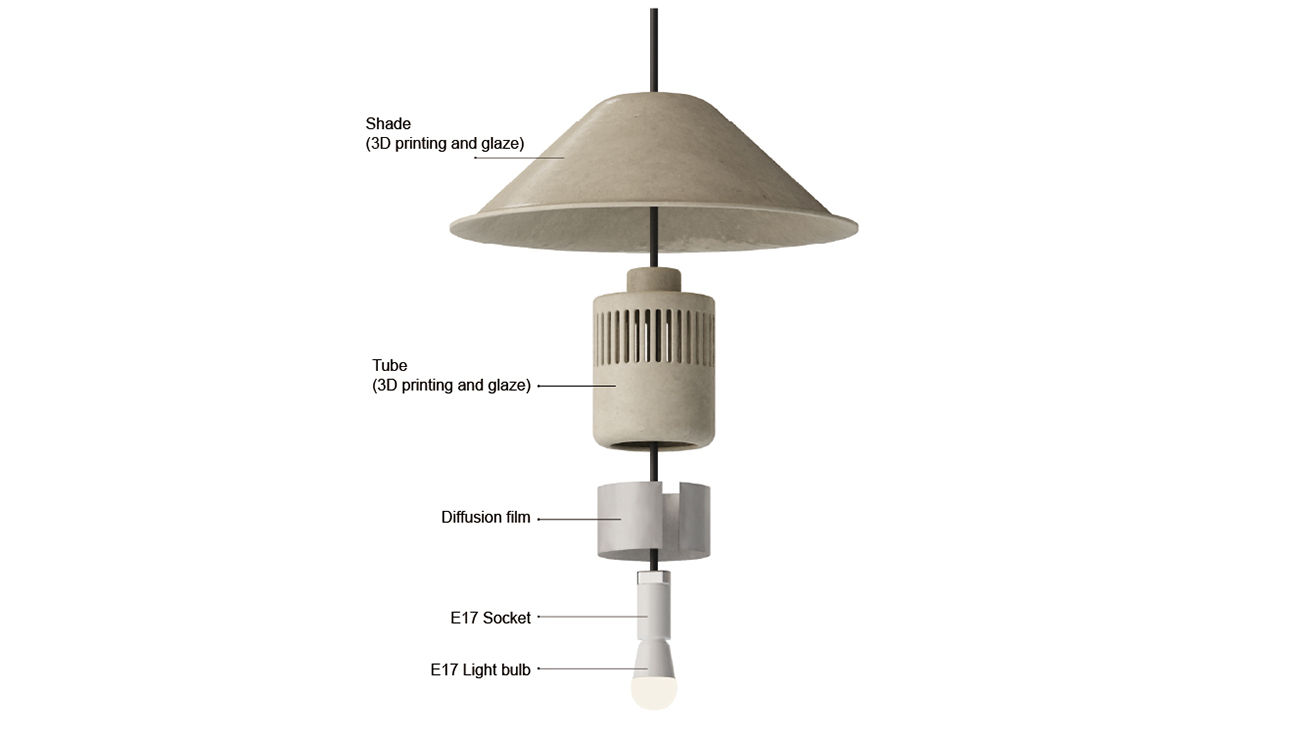
Image of the parts configuration. A mechanism allows light to leak through the slits in the tube and diffuse into the shade. The first image was a lamp shade in the shape of Mt. Fuji.
-

Mr. Ashizawa’s sketch. He modified the Mt. Fuji shape to a slightly more gentle curved shade.
-

This is the unglazed version when lit. The facial expressions that change on and off are also fun.
The soft curved surface also makes use of the texture of the pottery. “It’s good to have a textured lighting fixture, and I don't think there is any other lighting fixture made with a 3D printer. The expression and feel are unique,” Mr. Ashizawa said while enjoying the first touch.
It was Roland DG’s custom to glaze the sculptures, but Mr. Ashizawa paid attention to the unglazed texture. While retaining the unglazed look, it was decided to consider a way to make it resistant to water and stronger in the future.
The pendant light was also popular with the staff at the Mr. Ashizawa’s office. He said, “In order to use it efficiently, there is a possibility of a sense of scale, such as making lighting fixtures in a hotel with 100 rooms.” However, it seems that Mr. Ashizawa, who has a broad perspective, thinks that there may be explosive possibilities outside of architecture and interiors. Roland DG also created an example of the first lighting fixture he made. It is highly anticipated how the collaboration between architects and machine builders may develop in the future.
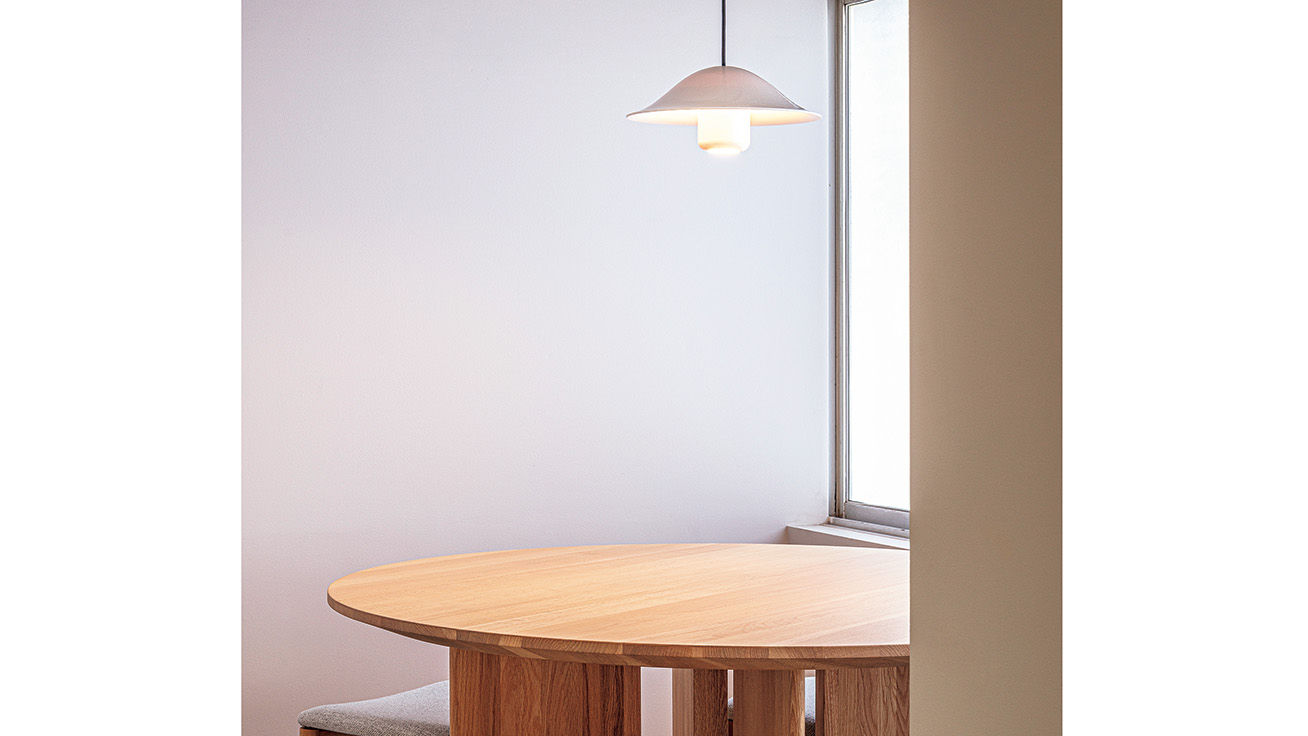
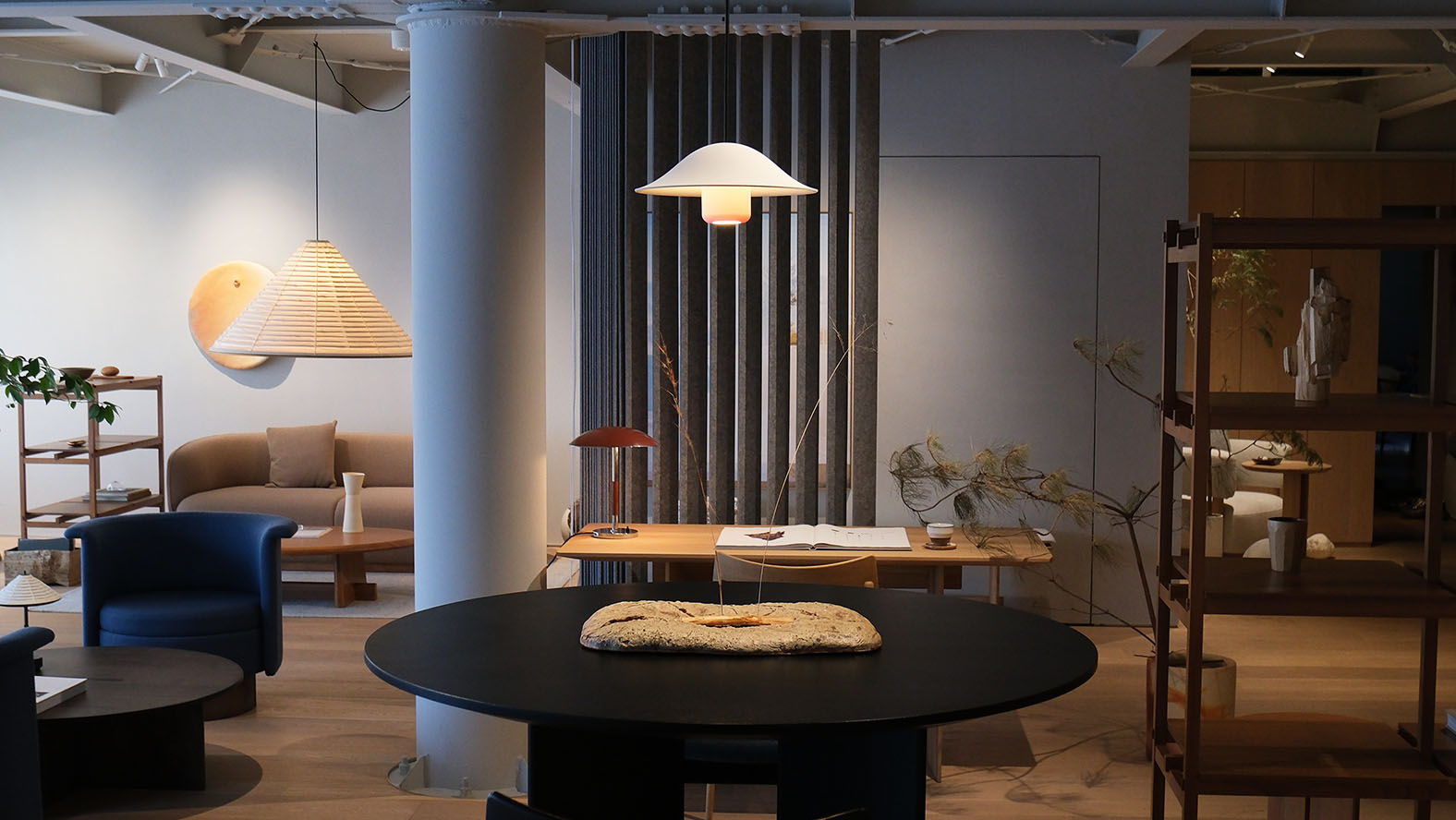
The resulting pendant light was tentatively named “KURAGE” by Mr. Ashizawa. Mr. Yusho Nishioka, a product team member of Keiji Ashizawa Design, set a light source (40W equivalent bulb-colored LED) within the pendant light. He hung it in a corner of the office and lit it. The gentle shade form and smooth texture harmonize, giving it a more pottery-like feel than imagined. It would be beautiful to hang multiple lamps over tables. “If we use a powder 3D printer, we can change the size for each project and customize it,” Nishioka said.
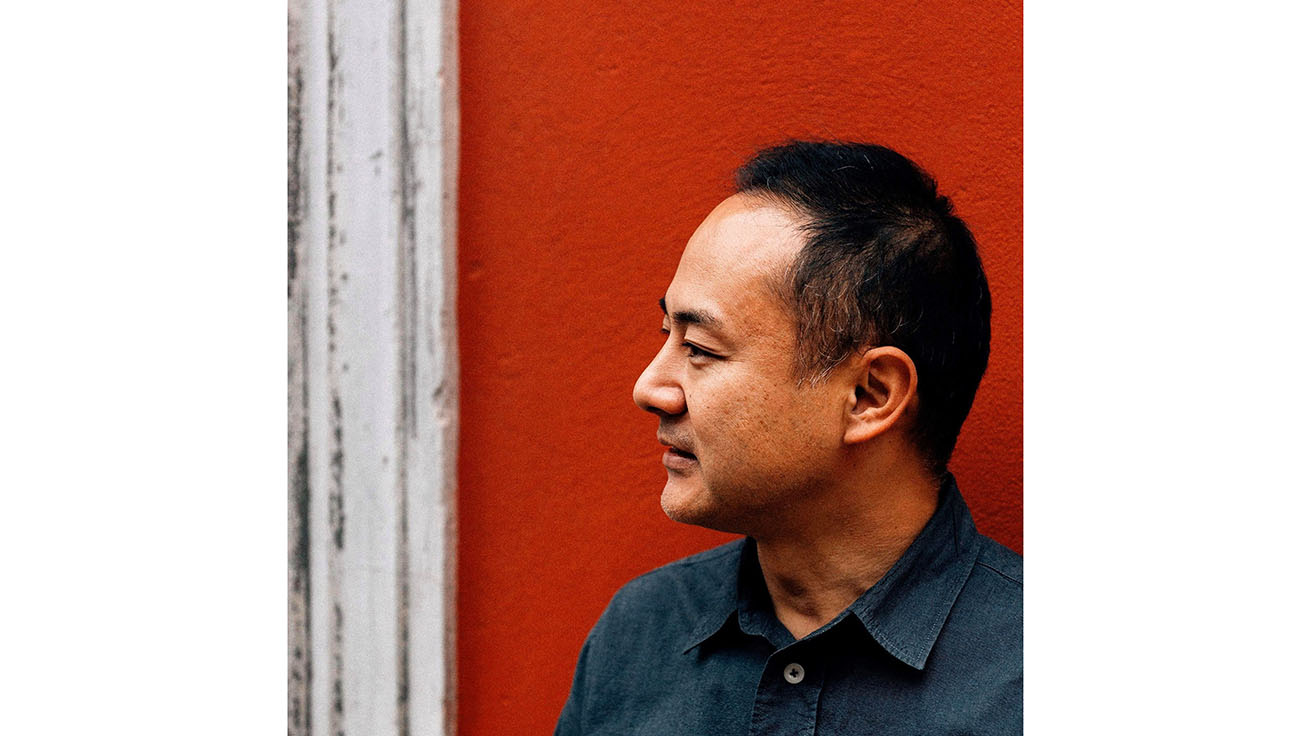
Keiji Ashizawa, Architect
In 2005, he established Keiji Ashizawa Design. He also serves as a co-representative of the Ishinomaki Laboratory. With the motto of “Honest Design,” they design architecture, interiors, and furniture, etc., in Japan and abroad while emphasizing craftsmanship. In recent architectural projects, he has been in charge of designing the TRUNK (HOTEL) YOYOGI PARK and Blue Bottle Coffee in Japan, and has been in charge of designing eight stores overseas. He also works with furniture brands such as Karimoku Case, KOKUYO, and Audo Copenhagen.
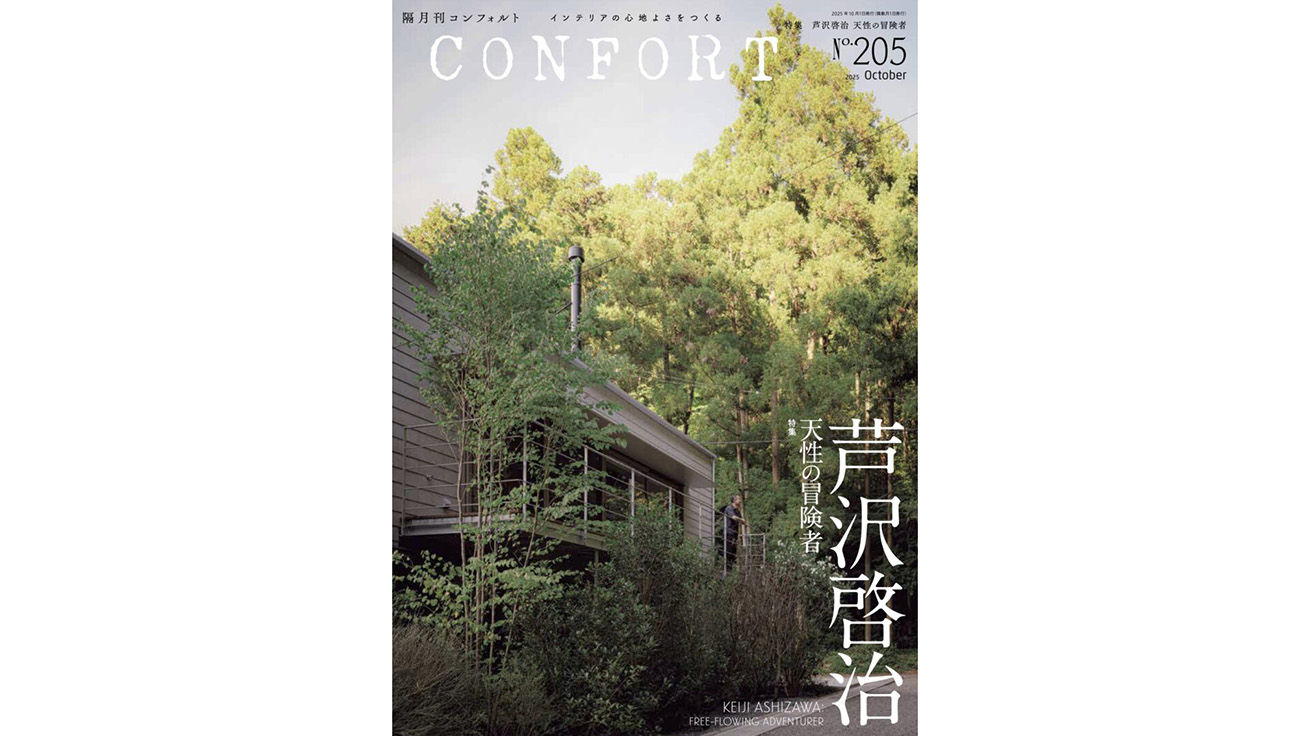
Click here more details from CONFORT magazine: https://confortmag.net/no-205/